To build effective raid strategies in World of Warcraft, you need a collaborative approach. Clear communication is key to success. Strong coordination helps manage roles, with each member contributing their specialized skills, like tanks managing aggro, healers providing support, and DPS focusing on damage. Adaptability and flexibility are vital, as strategies need to evolve with changing fight mechanics. Practice and refinement are essential, and leveraging content from resources like Mythic Trap, as well as collaborative tools like Warcraft Logs, helps you identify areas for improvement. Most importantly, maintain open communication to foster an environment where your team can work together to tackle raid challenges.
Key Takeaways
- Effective team raids start with practice in lower-level content before moving to more challenging encounters.
- Roles must be well-defined, with tanks managing aggression, healers providing support, and DPS focusing on damage.
- Flexibility and adaptability are crucial in raids, as strategies often need to be adjusted on the fly.
- Active communication is vital for successful raids, ensuring that all team members are on the same page.
- Clear roles, detailed strategies, and practical practice are essential for sustained success in raiding.
Effective Communication in Raids
To guarantee successful raid preparation and execution, a well-structured communication system is necessary, allowing team members to coordinate and plan effectively.
Effective listening and clear instructions are essential components of this system. During a raid, you should always be able to hear important callouts, making sure you’re on the same page as your teammates. If you plan to raid mythic, expecting to never talk might lead to issues in guild approval or progress, as communication is pivotal.
Even in less demanding raids, clear communication can make significant differences in performance and team morale. If you’re shy, start small by saying hi or typing in raid chat. Raid leaders and other key voices will typically dictate strategy and provide important updates, ensuring that questions are answered quickly.
Timely feedback and open communication are also crucial. After a fight, raid leaders can summarize key points to avoid confusion. These summaries help to reduce downtime, keeping the raid moving smoothly. Moreover, clear instructions help to mitigate information overload, focusing on key areas at a time.
These aspects ensure that your raid runs seamlessly, with everyone working together toward a common goal.
Managing Roles in a Team
In World of Warcraft raiding, your role is essential to the team’s success. Effective execution of your role, whether as a Tank, Healer, or DPS, relies on clear understanding and adaptability.
Managing your role requires practice, focus on your specialization, and flexibility in adjusting strategies when needed.
Communication Essentials
Developing clear communication channels ensures you effectively manage your roles within the raid team. Effective communication techniques are key to successful team cohesion. In a raid team, group dynamics rely heavily on the ability to coordinate strategies and execute them efficiently.
Leadership strategies often involve setting up clear communication channels, such as voice chat platforms, to facilitate coordination and clarify roles during raids. Consistent communication also helps to build trust among team members, which is essential when tackling challenging content. Communication includes more than just giving orders; you must guarantee everyone understands their specific role and the overall strategy.
Clear instructions can prevent misunderstandings and minimize downtime. Here are some practical tips for effective communication:
- Keep explanations concise and clear, making sure all raiders can easily understand.
- Set realistic goals and benchmarks for each raid.
- Use voice chat or text messages to coordinate strategies.
- Practice and adapt tactics to optimize performance.
Role Specialization
Role specialization within a raid team depends on clarifying each member’s responsibilities to guarantee concerted effort and progress. In a high-stakes raid environment, each player needs to understand their unique role and how it contributes to the team’s overall success.
This includes roles like tanks, who manage the aggression of bosses and other threats, keeping the team safe. Healers keep the team alive by providing critical healing support, while damage dealers (DPS) focus on dealing damage to enemies.
Achieving role specialization requires flexibility within the team. Each player must be able to adapt to various situations and adjust their strategy accordingly. This flexibility is crucial for team synergy, ensuring that all members are working towards a common goal.
Balancing specialization with teamwork coordination is essential. When each player knows their role and how to work with others, the team can execute more complex strategies and tackle tougher challenges. By mastering your role and working collaboratively with your team, you can build effective raid strategies and overcome even the most challenging obstacles in World of Warcraft.
Team Adaptability
As you navigate the complexities of raiding, maintaining a versatile team that adapts to changing circumstances is important to achieving success, and flexibly managing roles within your team becomes a key skill. This team adaptability relies on each player being capable of adjusting their role to counter unexpected challenges and optimize their contributions based on the situation.
Strong team synergy and player flexibility are important, as raid strategies evolve or unexpected issues arise. Strategy evolution requires adaptability, and being prepared to update tactics in real-time is essential.
A successful raid team must be able to switch strategies or adjust roles on the fly. This might involve adjusting assignments for handling adds, managing cooldowns, or even reassigning tasks to compensate for a missing player. Moreover, staying in sync through clear communication is crucial to guarantee smooth adaptations.
Adaptability keeps your team ahead of the game, turning potential setbacks into opportunities for growth. By cultivating this adaptability, you’ll be well-equipped to navigate the dynamic world of raiding, where flexibility and resilience are important to achieving victory.
Adapting to Fight Mechanics
As you progress through raids, understanding and adapting to key fight mechanics is essential for success.
You need to quickly identify key abilities and effects that require specific reactions, such as avoiding deadly areas or managing adds.
Key Mechanics
Keybinds play a vital role in quickly adjusting to changing fight mechanics, allowing you to concentrate on the boss while your fingers execute precise actions in response to telegraphed abilities. You need to optimize your keybinds to guarantee seamless control and accessibility to your abilities during complex encounters.
To effectively manage boss positioning and interrupt rotations, you should focus on strategic hotkey placement, keeping essential abilities readily available. This helps prevent last-minute mistakes. Additionally, add control and debuff management are essential aspects of fight adaptation. Setting up keybinds for these mechanics ensures smooth handling of phases requiring special attention.
A consistent and well-planned keybinding setup helps manage the pressure of maintaining control while adjusting to the boss’s abilities. This setup allows for quick adjustments and excellent performance under stress, enabling you to stay focused and responsive during demanding fight phases. Proper keybinds not only save you time but also enhance overall raid performance.
Adapting Strategy
When encountering new fight mechanics, adapt your strategy by breaking down actions into key elements, accurately identifying key raiders’ roles, and simplifying clear explanations to raiders. This allows your team to react quickly to changing circumstances, ensuring that vital steps aren’t overlooked.
Effective communication is essential in adapting your strategy. Assign specific roles and tasks clearly, ensuring that each raider understands their responsibilities. Quick adaptation relies on the ability to coordinate your team’s efforts seamlessly, making adjustments as needed.
Flexibility in your strategy is necessary, as fights often unfold differently than anticipated. Be prepared to reassign roles or tweak your approach if needed. Communication is key; make sure raiders are informed about changes and provide explanations that can help them execute tasks successfully.
Learning From Strategy Failures
To effectively learn from strategy failures, start by identifying specific issues that hindered your progress and isolate the exact mechanics that caused the failure. This is important to improve future performance and develop more detailed strategies for raid success.
| Issue | Adjustment |
|---|---|
| Incorrect Tank Position | Adjust by emphasizing communication during set-up and ensuring accurate positioning during the fight |
| Failure to Execute Rotation | Adjust by implementing rotation practice sessions and providing individual feedback |
| Delayed Healing Reactions | Adjust by focusing on faster healing responses, optimizing healing sequences, and promoting communication |
| Misjudging Enemy Movements | Adjust by detailing enemy movements, encouraging thorough study of mechanics, and highlighting key features for raiders |
When evaluating performance, adjust your tactics by addressing these key areas. Identifying and understanding where your strategy falls short is crucial for growth and adaptation in raiding. As you adjust and refine your approach, you will be better equipped to handle challenging situations effectively.
Improving Skill Through Practice
To take your raiding to the next level, practice regularly to improve your skills.
This involves mastering your class abilities through consistent practice and focusing on perfecting your movements and rotations.
Practice Regularly
In order to improve your raiding skills, you should regularly participate in lower difficulty content like normal dungeons and heroic dungeons. This practice is vital for developing your skills and understanding how your role functions within the team.
Consistency is key, as repeating specific actions and strategies helps build muscle memory and intuition.
Raid preparation also relies heavily on team dynamics. Working with your group to practice strategies, communicate effectively, and troubleshoot issues is important. This collaborative approach helps you better understand how to respond to different situations and make adjustments on the fly.
By regularly engaging in lower difficulty content, you can refine your skills, identify areas for improvement, and perfect your strategies before moving on to challenging raids.
Practice also helps you stay consistent with your rotation and positioning. Focusing on critical aspects like timing and positioning is vital in higher difficulty content. By regularly practicing, you can develop a deeper understanding of the intricacies of each boss fight, allowing you to optimize your performance and make meaningful contributions to your team.
Mastering Class Abilities
Mastering your class abilities involves identifying specific skill gaps and then practicing those skills in lower difficulty content like normal dungeons and heroic dungeons, where you can focus on perfecting your rotation, timing, and positioning without the added pressure of advanced mechanics.
To achieve mastery, it’s essential to understand ability synergy within your class and how it interacts with other classes. This includes learning effective combos and skill rotations that maximize your damage output and survivability.
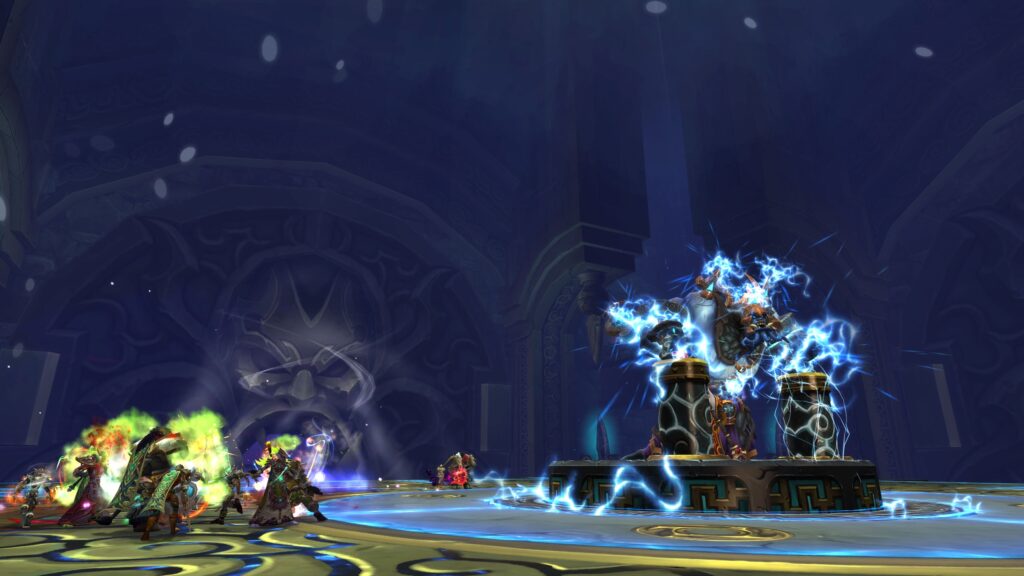
For instance, a warlock and a rogue can collaborate to set up a potent combo, with the warlock’s debuffs amplifying the rogue’s damage. Similarly, a healer like a priest can utilize abilities that enhance the effectiveness of their allies.
Incorporating these skills into your daily practice will notably enhance your performance in raids. You can utilize resources like Icy Veins and WoWHead to learn detailed guides on your class and its interactions with others.
Regular practice in lower-level content will help you develop muscle memory and instinctively recognize when to apply specific abilities to enhance your team’s performance. This focus on ability mastery will ultimately lead to more successful raids.
Improving Game Awareness
Improving your game awareness involves consistently practicing high-situational responsiveness and successful execution of mechanics on lower-level content. This allows you to develop muscle memory and build confidence in anticipating what’s happening in the raid. Watching streams of skilled players can also help you learn from their perspectives and strategies.
Practice is key to developing your game awareness. Start by working on tracking important buffs and debuffs during fights. A well-organized UI can greatly enhance your visibility and situational awareness. WeakAuras and other add-ons can help you focus on key elements of the raid and improve your response time.
Effective raid strategies require a high degree of situational awareness. This means being able to quickly recognize and react to specific mechanics and events. As you improve your game awareness, you’ll find yourself better equipped to identify critical moments and take decisive actions.
Role-Specific Strategies
To optimize your raid performance, you need to develop strategies tailored to each specific role within your group. As a team, understanding and coordinating these individual roles are essential for success.
For example, tank positioning is pivotal as it affects damage mitigation and party safety. Guarantee your tank knows the ideal positions for each encounter to minimize damage and maximize their own survival.
Meanwhile, healers need an efficient rotation that balances healing output with proactive management of party health. Developing this rotation involves understanding dungeon mechanics, anticipating damage cycles, and optimizing use of spells and cooldowns.
Effective coordination between roles also relies on clear communication and situational awareness. Healers should track party health and adjust their rotation accordingly. Tanks need to lead the group through dungeon routes, pacing, and positioning.
This interplay between roles can be intricate, but thorough practice and analysis will help refine your strategies, guaranteeing a cohesive and powerful raid team.
Leadership and Team Guidance
You’ll need to define and maintain a clear vision for your raid team, ensuring that every action serves a specific goal. Effective leadership is essential in achieving success in WoW raids. As a leader, you must be proactive and set achievable objectives that align the team’s efforts.
For instance, you might establish a goal to complete a specific phase with a minimum number of deaths. This helps keep the team focused and driven towards accomplishment.
Leadership guidance extends beyond simply setting goals. It involves fostering an environment where your team members feel motivated and encouraged. As a leader, you need to maintain open communication channels, ensuring that every member is informed and aligned with your objectives.
Communication tactics are crucial in these situations, helping to resolve any disputes or misunderstandings within the team. By cultivating a cohesive and well-coordinated team dynamic, you’ll optimize performance, build trust, and ultimately Triumph over challenging raid encounters.
Coordinating Multi-Phase Fights
As you explore the realm of multi-stage boss battles, one pivotal aspect stands out: coordination. Mastering multi-stage fights hinges on timing and adaptability, as each new stage presents a fresh set of challenges.
When shifting between stages, it’s vital that your team adjusts their strategy accordingly. Make sure you have open lines of communication to make quick decisions on the fly. This critical aspect can mean the difference between success and failure.
Familiarize yourself with each stage’s unique mechanics and adapt your approach to counter them effectively.
Stage transitions often introduce new mechanics or intensify existing ones. For example, some bosses may switch from close combat attacks to long-range during a stage change, or their health regenerates between stages.
To navigate these changes effectively, maintain flexibility and be prepared to organize your team’s movements and assignments to meet the evolving demands of each stage.
With adept team dynamics and well-practiced strategy adjustments, you’ll be better equipped to overcome the challenging obstacles presented by multi-stage fights.
Analyzing Raids for Improvement
Many post-raid discussions revolve around reviewing what went wrong and what can improve. When it comes to analyzing raids for improvement, you need robust tools to get the job done effectively. One such tool is WowAnalyzer, a platform that helps you gain valuable insights by examining your performance through personal feedback and stats.
This in-depth analysis allows you to pinpoint areas needing enhancement, ensuring you can develop targeted strategies to overcome challenges.
In addition to individual analysis, websites like Mythic Trap provide detailed guides for raid bosses, making it easier to understand and execute complex strategies. These resources also offer curated lists of essential WeakAuras and Addons to help you optimize your gameplay.
Moreover, platforms like Wipefest utilize Warcraft Logs data to provide concise summaries of raid encounters, making it simpler to identify and address issues.
Resilience and Team Morale
Optimizing performance also requires fostering resilience and teamwork within the guild, as a cohesive and motivated group is more likely to conquer the challenges World of Warcraft raids present. When your team spirit is high, you can tackle even the toughest boss fights efficiently.
Boosting Resilience and Team Morale
- Encourage Open Communication: Foster an environment where guild members feel comfortable sharing their concerns and ideas.
- Focus on Mental Toughness: Help your team develop the mental resilience needed to overcome setbacks and adapt to new strategies.
- Celebrate Successes: Acknowledge and celebrate each small victory to maintain morale and keep your team motivated.
Frequently Asked Questions
How Do I Handle Toxic Players in My Raid?
To handle toxic players in your raid effectively, prioritize communication strategies that emphasize respect and constructive feedback. Communicate that toxic behavior won’t be tolerated and that suggestions are welcome.
Set clear expectations at the start of the raid. If issues arise, discuss them privately with the player and consider benching them if necessary.
Guarantee that your raid strategy discussions are organized and time-efficient to minimize disruptions.
What Is a Suitable Channel for Sharing and Discussing Strategy?
When it comes to sharing and discussing raid strategies, Discord servers and guild forums are excellent channels. Discord Forum Channels offer dedicated spaces for focused discussions and provide tools for moderating and organizing content.
Guild forums, like those found on Blizzard Forums, can host long-form discussions and share detailed guides. Both platforms foster collaboration, making it easier to coordinate and improve your raid strategies.
Can Inexperienced Players Hold Key Roles in Raids?
In raids, inexperienced players may struggle to hold key roles. Leadership development and player rotations are significant considerations. Successful role assignments rely on effective communication strategies, ensuring everyone understands their tasks.
You should focus on building these skills if needed.
Next Steps:
- Read the question in context: Building Raid Strategies in WoW: A Collaborative Approach.
How Do I Maintain Player Morale During Extended Wipes?
To sustain player morale during extended wipes, focus on team bonding and group activities. Holding regular social events or games outside of raids fosters camaraderie and reduces frustration.
Use positive reinforcement and encouragement techniques, acknowledging individual efforts and progress. This keeps players motivated and guarantees they stay engaged even in the face of repeated wipes.
What Processes Can I Use to Monitor Player Performance?
To monitor player performance effectively, you can use various tools and methods. Start by tracking performance metrics like damage and healing numbers using tools like WoWAnalyzer.
Provide detailed feedback to players, focusing on specific areas of improvement. Coaching involves guiding them on how to adjust strategies and mechanics.
This approach guarantees that players are well-equipped to address their weaknesses and enhance their overall performance in the raid.
Conclusion
Effective communication and strong leadership are essential to success in World of Warcraft raids. Assigning clear roles, understanding boss mechanics, and in-fight coordination are vital.
Emphasize teamwork and support by sharing strategies and using tools to improve performance. Implement a constructive failure culture, apply learnings, and continually refine tactics for victory.


